
For years, the mere mention of rectal conditions was shrouded in silence. Patients living in Ahmedabad suffered quietly, hoping that chronic discomfort, painful swelling, or unusual discharge around the anal region would simply resolve itself.
However, ignoring these symptoms often leads to a more complex diagnostic reality: an anal fistula.
An anal fistula is an abnormal, tunnel-like tract that connects an infected gland inside the anal canal to the outer skin surrounding the anus. While traditional surgical approaches like a fistulectomy once meant deep tissue cutting, agonizing recovery times, and the lingering fear of fecal incontinence, medical science has taken a massive leap forward.
With advanced laser surgery for fistula—specifically FiLaC (Fistula-tract Laser Closure)—patients can finally step away from invasive, painful methods and embrace a pathway to painless healing.
Let us break down what an anal fistula is, explore why advanced laser therapies are revolutionizing proctology, and walk you through what to expect step-by-step.
1. What Exactly is an Anal Fistula?
To understand how advanced lasers heal a fistula, we must first understand what we are treating.
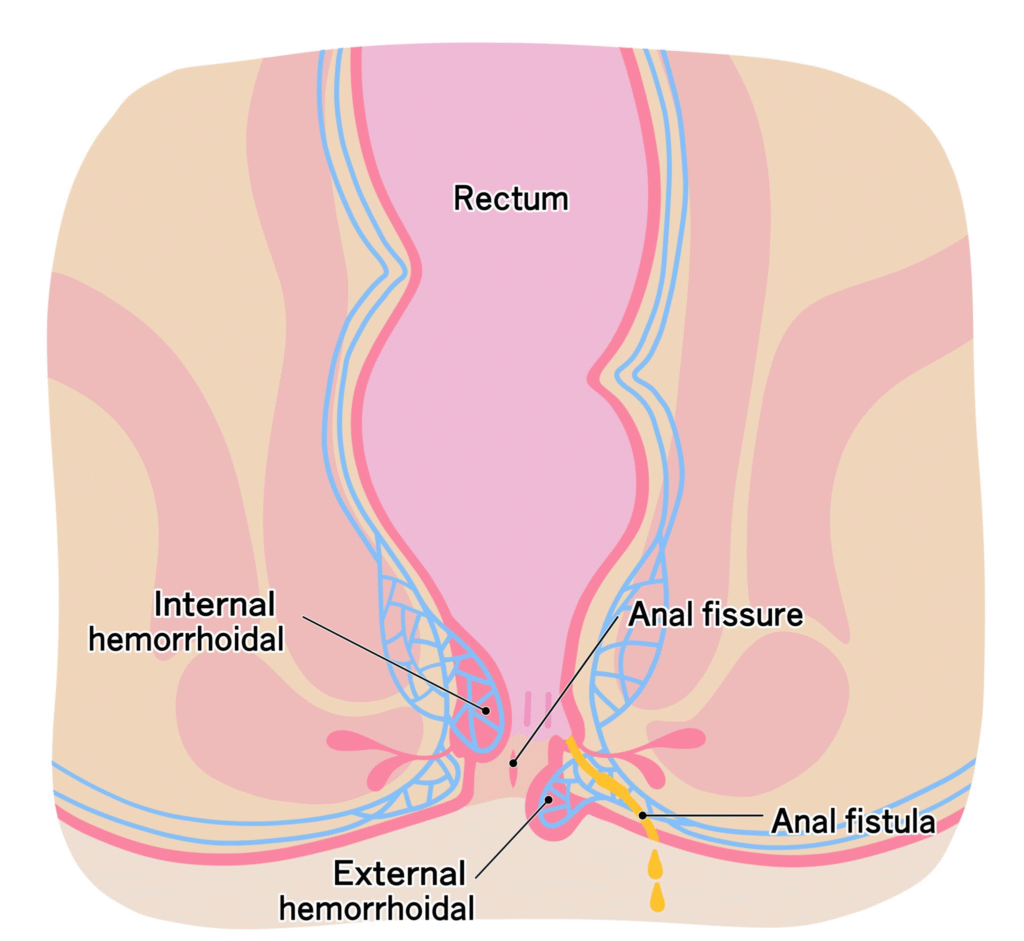
Our anal canal contains several small glands that secrete fluid. If one of these glands becomes blocked, it can get infected, forming an abscess (a localized collection of pus). Even after the pus is drained—either naturally or surgically—a small, persistent tunnel can remain behind. This permanent pathway is an anal fistula.
As shown in the anatomical diagram above, the tract passes directly through or near the sphincter muscles—the highly sensitive circular muscle groups that control bowel movements.
Common Symptoms of an Anal Fistula:
- Constant, throbbing pain in the perianal region, which intensifies while sitting, walking, or passing stool.
- Recurrent, foul-smelling pus or bloody discharge from an external opening near the anus.
- Swelling, redness, and localized tenderness.
- Intermittent fevers or chills triggered by deep-seated infections.
2. Laser vs Traditional Fistula Surgery: The Paradigm Shift
For decades, the standard treatment for a fistula was a fistulectomy (the complete surgical removal of the fistula tract) or a fistulotomy (laying open the tract so it heals from the inside out).
While effective at eliminating the tunnel, traditional surgeries carry several major drawbacks. Here is how they compare to modern laser procedures:
| Feature | Traditional Fistula Surgery (Fistulectomy/Fistulotomy) | Advanced Laser Surgery for Fistula (FiLaC) |
| Surgical Technique | Deep, open incisions made to cut out or lay open the tract. | Minimal intervention. A radial laser fiber is inserted directly into the tract. |
| Sphincter Muscle Risk | High risk of cutting or damaging sphincter muscles, potentially causing fecal incontinence. | Zero risk to sphincter muscles. The laser energy is highly targeted, preserving tissue. |
| Pain Level | Moderate to severe post-operative pain requiring heavy painkillers. | Minimal post-operative discomfort. |
| Wound Dressing | Requires daily, painful open-wound packings and dressings for 6 to 8 weeks. | No large open wounds; no painful daily dressings required. |
| Recovery Period | 4 to 6 weeks of bed rest and restricted physical activity. | Recovery within 24 to 48 hours; resume normal activities quickly. |
| Recurrence Rate | Higher recurrence rates in complex or high fistulas due to incomplete tracking. | Extremely low recurrence rates when performed by expert proctologists. |
3. The Science Behind FiLaC: How Laser Energy Closes the Tract
How does advanced laser surgery for fistula work without cutting any skin?
The magic lies in a specialized, flexible radial laser fiber. Instead of cutting open the skin to expose the tunnel, the surgeon gently inserts this fiber directly through the external opening of the fistula, feeding it all the way to the internal opening inside the anal canal.
Once in place, the laser emitting diode is activated. It releases controlled, radial thermal energy ($360^\circ$ circular emission) as the surgeon slowly pulls the fiber outward.
This thermal energy causes two things to happen:
- Denaturation of proteins in the tissue lining the fistula tract.
- Controlled shrinkage and collapse of the tissue walls, essentially “melting” and sealing the tunnel shut behind it.
Because the laser beam penetrates only a fraction of a millimeter into the surrounding tissue, the delicate anal sphincter muscles remain completely untouched. This is the primary reason why patients experience an incredibly smooth, pain-free recovery.
4. Step-by-Step Patient Journey: What to Expect
Undergoing any medical procedure can feel overwhelming. To put your mind at ease, here is the exact step-by-step journey of a patient receiving advanced laser treatment at a piles and fistula clinic in Ahmedabad.
Phase 1: Pre-Operative Preparation and Diagnosis
Your journey begins with a detailed physical evaluation by a specialist proctologist.
- Imaging: For complex or multi-branching fistulas, an MRI Fistulogram is often recommended. This high-definition scan acts as a 3D roadmap, showing the surgeon exactly where the tract runs, how deep it goes, and its relationship to the sphincter muscles.
- Medical Clearances: Standard pre-operative blood tests, ECG, and a physical fitness evaluation are completed.
- Dietary Instructions: You will be asked to eat a light, high-fiber diet the day before, followed by a brief period of fasting (usually 6 hours) before the surgery. An enema may be administered to clear your bowels prior to the procedure.
Phase 2: The Day of Surgery
On the day of your procedure, you will be admitted to our state-of-the-art daycare facility in Ahmedabad.
- Anesthesia: The procedure is performed under spinal anesthesia or short general anesthesia, meaning you will feel absolutely no pain during the surgery.
- The Procedure (Under 30 Minutes):
- The surgeon locates the internal and external openings of the fistula.
- The tract is thoroughly cleaned and flushed of any pus, inflammatory tissue, or debris.
- The flexible laser fiber is inserted into the tract.
- Controlled laser energy is applied as the fiber is withdrawn, sealing the track completely.
- Post-Op Recovery Room: You are moved to a recovery lounge where our nursing team monitors you as the anesthesia wears off. Because there are no large open wounds, you can usually sit up, drink water, and walk within a few hours. Most patients are discharged on the very same day.
Phase 3: Post-Operative Care and Healing
While the surgery is virtually painless, proper post-operative care ensures rapid, uncomplicated healing.
1.Maintain Perianal Hygiene:Days 1 to 14.
Keep the area clean and dry. After bowel movements, gently clean the area with warm water or wet wipes instead of dry toilet paper.
2.Daily Warm Sitz Baths:Days 2 to 10.
Sit in a tub of warm water for 10-15 minutes, 2 to 3 times a day. This relaxes the pelvic floor muscles, improves local blood circulation, and promotes rapid healing.
3.Follow a High-Fiber Diet:Weeks 1 to 4.
Drink at least 3 liters of water daily. Consume fiber-rich foods like green leafy vegetables, oats, whole grains, and fruits to keep stools naturally soft and easy to pass.
4.Take Prescribed Medications:As Directed.
Take mild pain relievers, stool softeners, and antibiotics (if prescribed) exactly as directed by your surgeon to prevent any strain during bowel movements.
5. Is Fistula Laser Surgery Painful? Addressing Patient Concerns
The most common question we hear in our outpatient department is: “Is fistula laser surgery painful?”
The short answer is no. Unlike traditional open surgeries that leave deep wounds in highly sensitive nerve zones, laser surgery is incredibly gentle.
Here is why patients experience such a comfortable recovery:
- No Raw Cut Edges: Traditional surgery leaves an open, raw wound that is constantly irritated by bowel movements and muscle spasms. Laser surgery leaves the overlying skin intact, meaning there are no cut nerve endings exposed to the air.
- Minimal Tissue Trauma: The laser energy is highly localized. It targets only the internal lining of the tract, leaving the surrounding skin, fat, and muscle completely unharmed.
- Smooth Bowel Movements: Because the sphincter muscles are not cut, passing stool after laser surgery does not trigger the severe, tearing spasms associated with traditional fistulectomies.
While you might feel a mild, warm sensation or a dull ache for a day or two after the procedure, it is easily managed with basic, over-the-counter pain relievers. Most patients find that they do not need heavy painkillers at all.
6. Why Choose a Specialized Piles and Fistula Clinic in Ahmedabad?
Ahmedabad has grown into a major hub for advanced proctology. When searching for the right facility for your treatment, selecting a specialized clinic makes all the difference:
- Proctology Specialists: General surgeons may offer various surgical options, but a dedicated proctologist performs thousands of laser procedures every year, bringing unparalleled precision to the operating table.
- Cutting-Edge Laser Infrastructure: Superior clinics utilize advanced, high-wavelength diode lasers that offer finer control, reducing thermal spread and maximizing success rates.
- Empathetic, Discreet Care: Rectal conditions can feel embarrassing. Choosing a dedicated clinic ensures you receive treatment in a compassionate, confidential, and comfortable environment designed specifically for anorectal care.
Frequently Asked Questions (FAQs)
Q1. How long does the advanced laser surgery for fistula take?
The actual laser application takes only about 15 to 30 minutes, depending on the length and complexity of the fistula tract. Including pre-operative preparation and post-anesthesia recovery, you can expect to spend about 4 to 6 hours at the hospital before being discharged on the same day.
Q2. Can a complex or high-anal fistula be treated with laser surgery?
Yes. Laser surgery is highly effective for complex, deep, or high-anal fistulas. In fact, lasers are often preferred for these cases because traditional surgery carries a very high risk of cutting the deep sphincter muscles, which can lead to permanent fecal incontinence. For highly complex, multi-branched tracts, surgeons may combine laser closure with other sphincter-saving techniques like VAAFT (Video-Assisted Anal Fistula Treatment) or a temporary Seton placement.
Q3. What is the recovery time after laser fistula surgery?
Most patients can stand, walk, and consume a light meal within 3 to 4 hours of the surgery. You can easily resume light desk work and daily household activities within 24 to 48 hours. However, it is advisable to avoid heavy lifting, strenuous exercise, and long-distance travel for about 1 to 2 weeks to allow complete internal tissue healing.
Q4. Is there a risk of recurrence after laser fistula surgery?
No surgical procedure has a 100% cure rate for fistulas, as individual healing capacities and underlying health conditions vary. However, the recurrence rate for advanced laser fistula surgery is exceptionally low when performed by an experienced proctologist. The keys to preventing recurrence are ensuring the internal opening is completely sealed during surgery and strictly following your post-operative dietary and hygiene guidelines.
Q5. Is laser surgery for fistula covered by medical insurance?
Yes. Since anal fistula is a medical condition that requires surgical intervention to prevent complications like deep tissue abscesses or systemic infections, most major health insurance policies and Mediclaim plans cover advanced laser surgeries (like FiLaC). Be sure to check with your hospital’s insurance desk to confirm your policy details and cashless pre-authorization options.
If you or a loved one are struggling with the painful symptoms of an anal fistula, there is no need to suffer in silence or fear a long, painful recovery. Step into a life of comfort and painless healing with advanced laser surgery.

Inspired by his father, Dr. Devendra Shah, from an early age, Dr. Niket Shah always aspired to follow in his footsteps and build a career in proctology. With a vision to continue his father’s legacy, he is committed to serving patients with the same dedication, compassion, and ethical approach that defines Shah Piles Fistula Hospital.
Young, dynamic, and highly skilled, Dr. Niket Shah brings a modern outlook and innovative techniques to the field of proctology. His continuous efforts to adopt new methods of treatment reflect his goal of providing patients with less pain, quicker recovery, and long-lasting relief.
Guided by the belief that “Where passion meets hard work, an individual always grows”, Dr. Niket Shah combines his passion for healthcare with a strong professional foundation, making him a trusted name among patients seeking advanced care for Piles, Fissure, and Fistula & Pilonidal Sinus.
- Can I go to the gym after laser surgery? - July 29, 2026
- Can piles become cancer? - July 25, 2026
- Can piles disappear naturally? - July 22, 2026