
Gym, Heavy Lifting, and Piles: How to Workout Safely Without Aggravating Hemorrhoids
Fitness is a massive part of a healthy lifestyle, and hits to the gym can keep you feeling strong, energized, and balanced. However, if you are struggling with a painful flare-up of piles (hemorrhoids), hitting the gym can quickly become an exercise in anxiety.
Many fitness enthusiasts and casual gym-goers face a sudden dilemma when diagnosed with piles: Do I have to quit my fitness routine entirely? Will lifting weights make things permanently worse?
The short answer is no, you do not have to abandon your active lifestyle permanently. However, you absolutely must change how you train. Certain high-intensity workouts and improper breathing mechanics can place extreme pressure on your pelvic floor, turning a minor issue into a severe medical emergency.
As a leading piles treatment clinic in Ahmedabad, we see thousands of individuals who inadvertently worsen their anorectal health through heavy gym routines. This comprehensive guide will break down the mechanics of weightlifting with piles, outline specific gym exercises to avoid with hemorrhoids, and detail how to design a safe, highly effective workout plan that promotes healing while preserving your hard-earned muscle.
Understanding Piles: The Hidden Impact of Intra-Abdominal Pressure
To understand how working out affects piles, we first need to look at what piles actually are. Inside your anal canal lies a natural network of vascular cushions (blood vessels, smooth muscle, and connective tissue). Their primary job is to help maintain bowel control.
When these vascular cushions become pathologically swollen, inflamed, or stretched, they turn into what we clinically call hemorrhoids or piles.
The underlying culprit behind most hemorrhoid flare-ups in the gym is a drastic rise in intra-abdominal pressure. Think of your core as a sealed canister. When you brace for a heavy lift, hold your breath, or bear down, you increase the pressure inside that canister. That downward force travels directly through your pelvic floor, causing the veins in the rectum and anus to swell, bulge, and potentially prolapse (protrude outside the body) or bleed.
Knowing the Difference: Piles vs. Other Conditions
Before adjusting your fitness routine, it is vital to know exactly what you are treating. Many fitness enthusiasts misdiagnose their anal pain. As detailed in our foundational guide on the difference between piles, fissure, fistula, and pilonidal sinus, a sharp tear in the skin caused by passing hard stools is a fissure, whereas an infected tunnel linking to an abscess is a fistula. Piles, on the other hand, are strictly vascular swellings. Getting an accurate diagnosis at a specialized clinic ensures you aren’t treating a fissure with therapies meant only for piles.
The Danger Zone: Gym Exercises to Avoid with Hemorrhoids
If you are currently managing a piles flare-up, certain movements must be temporarily benched. These exercises create massive spike zones for intra-abdominal pressure or apply direct friction to an already sensitive, inflamed area.
1. Heavy Barbell Squats (Back and Front)
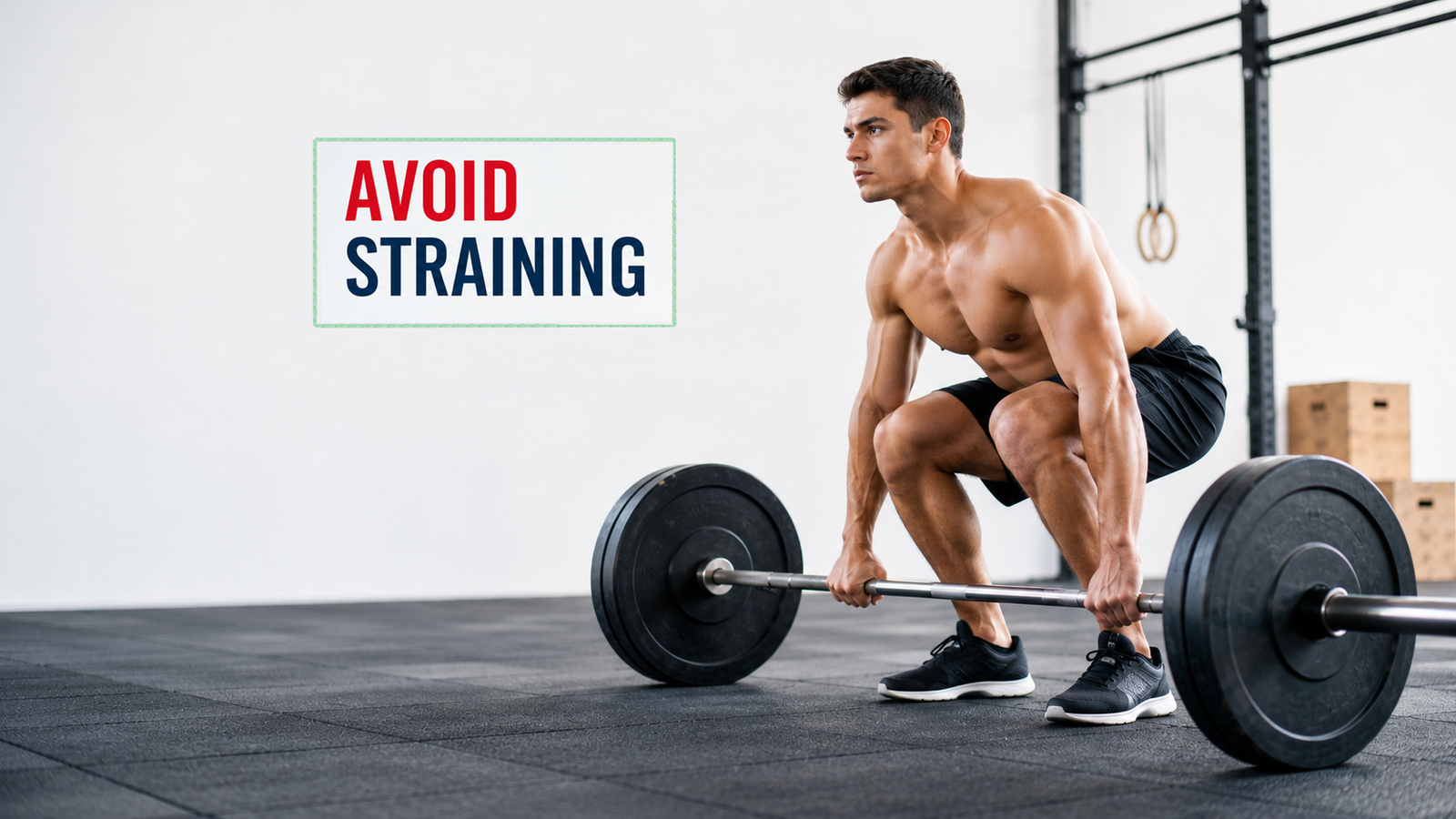
Squats are the undisputed king of lower-body development, but they require massive core stabilization and lower body drive. When you sink into a deep squat with heavy iron on your back, the sheer downward force on your pelvic floor is immense. If you struggle with internal or external piles, heavy squats can instantly cause bleeding or force internal tissues to prolapse outward.
2. Standard Conventional Deadlifts
Deadlifts require you to rip a heavy load directly off the floor. This action demands immense structural bracing. Most lifters instinctively use a technique called the Valsalva Maneuver (holding your breath against a closed airway) to stabilize their spine. While this protects your lower back, it acts like a high-pressure pump pushing down on your rectal veins.
3. Heavy Leg Presses
Sitting in a leg press machine and pulling your knees deep into your chest drastically compresses your abdomen. Pushing a heavy weight sled away from you from this heavily compressed position sends localized pressure rocketing straight to the perineum.
4. Standing Overhead Military Presses
Pressing high weights directly over your head forces your entire core and pelvic floor to lock down to keep you from falling over. This intense, sustained stabilization can severely aggregate protruding hemorrhoids.
5. Standard Upright Stationary Bicycles
The seats on most commercial upright gym bikes are narrow, hard, and unforgiving. Sitting heavily on a small saddle applies direct, structural friction and pressure to external hemorrhoid sites, compromising local blood flow and making inflammation significantly worse.
How to Lift Safely: The Rules of Weightlifting with Piles
You do not need to give up weight training entirely. Instead, you must switch your focus to smart modification, controlled load selection, and pristine breathing mechanics.
Rule 1: Master Continuous, Conscious Breathing
The single most critical adjustment you can make is to never hold your breath during a rep.
- Avoid the Valsalva maneuver.
- Instead, utilize the “Exhale on Exertion” method.
- Inhale deeply as you lower the weight (eccentric phase), and blow out smoothly and continuously through your mouth as you push or pull the weight (concentric phase). This open-airway breathing allows built-up intra-abdominal pressure to escape upward rather than forcing it down onto your pelvic floor.
Rule 2: Choose Supported Variations
Whenever possible, swap out free-standing lifts for variations where your torso or back is supported by an inclined or flat gym bench. This physically dampens the bracing demand placed on your core and pelvic floor.
Rule 3: Trade Maximum Intensity for High-Volume Hypertrophy
Now is not the time to test your one-rep maximum (1RM). Drop the working weights down to 50% to 60% of your maximum capacity and shift your focus toward higher repetition ranges (12 to 15 controlled reps per set). This maintains target muscle stimulation through volume without causing the severe pressure spikes associated with maximum strength lifting.
Piles-Friendly Alternatives for Your Workout Split
To help you reconstruct your gym program, here is a breakdown of safe, effective alternative exercises that keep you moving forward without risking a setback.
| Traditional Heavy Exercise | Safe, Effective Alternative | Why It Works |
| Heavy Barbell Squat | Bodyweight Box Squats or Dumbbell Goblet Squats (Lighter Weight) | Drastically reduces spinal and pelvic axial loading; allows for an upright torso. |
| Conventional Deadlift | Lying Glute Bridges or Seated Hamstring Curls | Targets the glutes and hamstrings directly without putting pressure on the lower abdomen. |
| Barbell Bench Press | Incline Dumbbell Press or Seated Chest Press Machine | Eliminates heavy full-body bracing; keeps your core stable and fully supported by a bench. |
| Overhead Military Press | Seated Lateral Dumbbell Raises | Isolates the shoulders cleanly without requiring heavy abdominal bearing down. |
| Upright Stationary Bike | Recumbent Bicycle or Elliptical Trainer | Recumbent seats distribute your weight across the glutes and lower back rather than directly on the perineum. |
Essential Post-Workout Hygiene and Recovery Tips
What you do immediately after your workout session is just as important as the exercises you perform inside the gym.
- Change Out of Sweaty Gear Immediately: Staying in damp, sweat-soaked gym clothes creates a breeding ground for bacteria, increasing localized itching, skin breakdown, and irritation around external hemorrhoids. Wash the area gently with plain warm water.
- Hydrate Constantly: Drink plenty of water throughout your gym session. Staying hydrated is the foundational pillar of keeping your digestive tract moving smoothly, preventing the hard stools and straining that cause piles in the first place.
- The Magic of the Post-Workout Sits Bath: If you feel a mild throb or irritation after a workout, soak your pelvic region in a tub of warm water (a Sits bath) for 15 to 20 minutes. This promotes local blood flow, relaxes the internal anal sphincter muscle, and significantly reduces post-exercise swelling.
When to Step Away from the Gym and See a Doctor
While minor piles flare-ups can be managed with exercise modifications and a high-fiber diet, you must know when to stop working out and seek professional care. Piles can progress through four distinct stages, and advanced stages require targeted clinical intervention rather than simple gym adjustments.
Recognizing the Warning Signs:
- Active, Bright Red Bleeding: Finding blood dripping into the toilet bowl or noticeably staining your fitness clothing during or after lifting.
- Persistent Prolapse: Internal hemorrhoid tissue that pushes out during a workout and does not return inside on its own, or requires manual reduction.
- Severe, Debilitating Pain: Sharp, continuous pain that prevents you from sitting comfortably, walking, or going about your daily routine. This could indicate a thrombosed external hemorrhoid (a blood clot within the hemorrhoid), which requires immediate medical attention.
If you observe any of these symptoms, continuing your gym routine can lead to severe tissue damage, chronic anemia, or strangulated hemorrhoids.
Advanced Medical Solutions for Active Individuals
If lifestyle changes and workout modifications aren’t providing the relief you need, it is time to consult a specialized piles treatment clinic in Ahmedabad. Modern proctology offers advanced, minimally invasive treatments designed to eliminate piles permanently with minimal downtime, allowing you to return to the gym faster than ever before.
Laser Hemorrhidoplasty (LHP)
Laser treatment is a highly precise, state-of-the-art procedure where laser energy is directed into the hemorrhoidal mass. This cuts off the blood supply to the pile mass, causing it to shrink and wither away naturally over a few days.
- The Fitness Advantage: There are no open wounds, minimal post-operative pain, and a drastically accelerated recovery timeline compared to traditional surgery.
Stapled Hemorrhoidopexy
Ideal for advanced, prolapsed internal piles. This procedure utilizes a specialized stapling device to lift the prolapsed tissue back into its natural anatomical position and disrupt its blood supply.
- The Fitness Advantage: This technique avoids sensitive external nerve zones, ensuring a much smoother, less painful recovery period.
Recovery Timelines for Athletes
Following advanced minimally invasive therapy, many patients can resume light walking within 48 to 72 hours. While heavy powerlifting or high-impact training should be avoided for 4 to 6 weeks to ensure complete deep-tissue healing, you can safely return to your full fitness potential far sooner than with old-school open surgeries.
Summary FAQs: Your Gym & Piles Guide
1. Can weightlifting cause piles if I don’t already have them?
Weightlifting itself does not directly cause piles, but improper technique can trigger them if you are already predisposed. Holding your breath while straining under heavy weights (the Valsalva maneuver) creates extreme intra-abdominal pressure. Over time, this repetitive downward pressure strains and stretches the blood vessels in the anal canal, causing them to swell into piles. Practicing proper breathing mechanics is your best line of defense.
2. Is running or cardio safe to do during a piles flare-up?
Yes, most moderate cardio exercises are highly beneficial. Activities like brisk walking, using the elliptical machine, and swimming improve overall blood circulation and stimulate healthy bowel movements, which prevents constipation. However, you should avoid exercises that cause significant friction, such as intense long-distance running during a severe flare-up, or using upright stationary bicycle seats.
3. Should I wear a weightlifting belt if I have hemorrhoids?
You should exercise caution. Weightlifting belts are specifically designed to give your abdominal muscles a surface to brace against, which intentionally increases intra-abdominal pressure to stabilize your spine during maximum lifts. If you are experiencing a piles flare-up, this increased pressure can worsen the swelling. It is better to lower your weights and focus on building core stability without relying heavily on a belt.
4. How long after a piles laser treatment can I return to lifting heavy weights?
While laser treatments offer a very fast recovery time compared to traditional surgery, deep tissue healing still takes time. You can typically return to light activities like walking within 2 to 3 days. However, you should avoid heavy weightlifting, intense straining, or deep squats for at least 3 to 4 weeks, and only resume after a follow-up clearing from your treating proctologist.
5. Can doing Kegel exercises help prevent piles from weightlifting?
Yes, Kegel exercises can be very effective. Kegels involve the repetitive contraction and relaxation of the pelvic floor muscles. Strengthening these muscles helps support the local pelvic architecture, improves regional blood circulation, and prevents veins from bulging under pressure. Integrating pelvic floor strengthening into your routine can help protect your body against the downward forces generated during heavy lifting.
Take Charge of Your Health
Don’t let anal pain keep you from living a healthy, active life. If piles are holding you back from reaching your fitness goals, get an expert evaluation and a clear roadmap to recovery.

Inspired by his father, Dr. Devendra Shah, from an early age, Dr. Niket Shah always aspired to follow in his footsteps and build a career in proctology. With a vision to continue his father’s legacy, he is committed to serving patients with the same dedication, compassion, and ethical approach that defines Shah Piles Fistula Hospital.
Young, dynamic, and highly skilled, Dr. Niket Shah brings a modern outlook and innovative techniques to the field of proctology. His continuous efforts to adopt new methods of treatment reflect his goal of providing patients with less pain, quicker recovery, and long-lasting relief.
Guided by the belief that “Where passion meets hard work, an individual always grows”, Dr. Niket Shah combines his passion for healthcare with a strong professional foundation, making him a trusted name among patients seeking advanced care for Piles, Fissure, and Fistula & Pilonidal Sinus.
- Can I go to the gym after laser surgery? - July 29, 2026
- Can piles become cancer? - July 25, 2026
- Can piles disappear naturally? - July 22, 2026